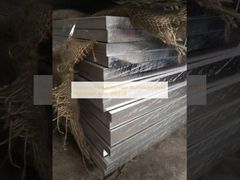
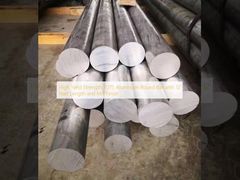
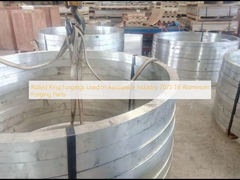
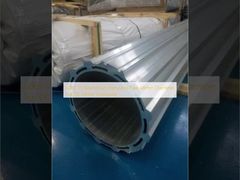
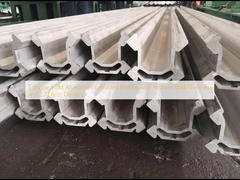
Aircraft Fittings 7075 T651 Aluminum Plate High Weight - To - Strength Ration

Aluminum Sheet Plate
December 15, 2025
Category Connection: Aluminum Sheet Plate
Brief: In this video, we take a focused look at the specifications of the 7075 T651 Aluminum Plate and what they mean in practice for high-stress aerospace applications. You will see how its excellent weight-to-strength ratio makes it ideal for aircraft fittings, missile parts, and regulating valves, and learn about its mechanical properties, formability, and heat treatment processes.
Related Product Features:
  • Offers an excellent weight-to-strength ratio, ideal for highly stressed structural parts.
  • Known for its high toughness and strength, frequently used in aerospace and aviation.
  • Provides good formability in the annealed condition, with heat treatment options for enhanced strength.
  • Exhibits excellent low-temperature properties and electrical conductivity at 36% of copper.
  • Features high tensile strength (83,000 psi), shear strength (48,000 psi), and fatigue resistance.
  • Commonly applied in aircraft fittings, missile parts, regulating valves, and meter gears.
  • Suitable for use in commercial aircraft components and aerospace defense equipment.
  • Can be forged at temperatures between 700 and 900°F, followed by solution heat treatment.
Faqs:
  • What makes 7075 T651 Aluminum Plate suitable for aircraft fittings?
    Its excellent weight-to-strength ratio and high toughness make it ideal for highly stressed structural parts in aerospace, such as aircraft fittings, missile components, and regulating valves.
  • How does the formability and heat treatment of 7075 aluminum work?
    In the annealed condition, the plate can be formed and then heat-treated to achieve high strength. If forming is difficult, heating to 200-250°F can soften it, and forging requires temperatures of 700-900°F followed by solution heat treatment.
  • What are the key mechanical properties of 7075 aluminum alloy?
    It has a tensile strength of 83,000 psi, shear strength of 48,000 psi, and excellent fatigue strength, along with good low-temperature performance and electrical conductivity at 36% that of copper.